



Molecular Ring Technology Opens New Possibilities for Smart Polymer Materials
Researchers at The University of Hong Kong (HKU) have developed a breakthrough approach that could transform the design of next-generation polymer materials. By using molecular rings as precise structural models, scientists have uncovered how hidden molecular chain length influences key material properties such as stiffness, toughness, elasticity, and energy absorption.
Polymers are found in countless everyday products, from plastic packaging and automotive components to wearable electronics and medical devices. At the molecular level, these materials consist of long chain-like structures that become entangled in complex arrangements. Understanding how these molecular entanglements affect material performance has long been a challenge for researchers.
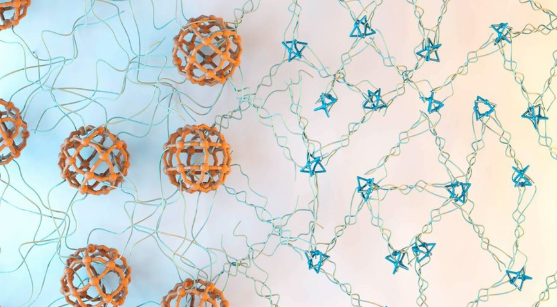
The HKU research team, led by Professor Yufeng Wang and Professor Ho Yu Au-Yeung, developed a new framework that replaces traditional polymer entanglements with carefully designed molecular ring structures. This approach allows scientists to observe how specific molecular architectures influence mechanical performance.
A key discovery of the research is the concept of “hidden length” — internal molecular slack that can be released when a material is subjected to mechanical force. The amount of hidden length present within the molecular structure determines how a material responds to stress, directly affecting its strength, flexibility, and durability.
Researchers found that simple macrocyclic molecular rings possess significant hidden length, enabling them to absorb large amounts of energy during deformation. Materials based on these structures demonstrated exceptional toughness and impact resistance.
In contrast, mechanically interlocked molecular rings known as catenanes exhibited less hidden length and behaved more like highly responsive springs. These structures delivered superior elasticity, allowing materials to quickly recover their original shape after stretching or deformation.
The team further demonstrated that material properties can be dynamically adjusted through the introduction of copper ions. This “metal switch” mechanism effectively locks molecular movement, increasing rigidity and enabling controllable transitions between flexible and stiff material states.
According to the researchers, this discovery provides a new blueprint for designing advanced smart materials with application-specific performance characteristics. By selecting particular molecular architectures and controlling hidden chain length, scientists can engineer materials tailored for demanding industrial and technological applications.
The findings could have significant implications for emerging sectors such as soft robotics, tissue engineering, wearable electronics, flexible sensors, and advanced healthcare devices. Materials used in these applications often require a unique combination of strength, flexibility, durability, and responsiveness — characteristics that can now be more precisely engineered through molecular design.
Industry experts believe that advances in molecular topology and polymer architecture will play an increasingly important role in the development of next-generation functional materials, supporting innovation across electronics,healthcare, mobility, and advanced manufacturing industries.
The breakthrough highlights the growing importance of polymer science in creating intelligent materials capable of adapting to changing environments and performance requirements.
#HKU #polymer #polymersglobal#modernpolymers #modernpolymersglobal

